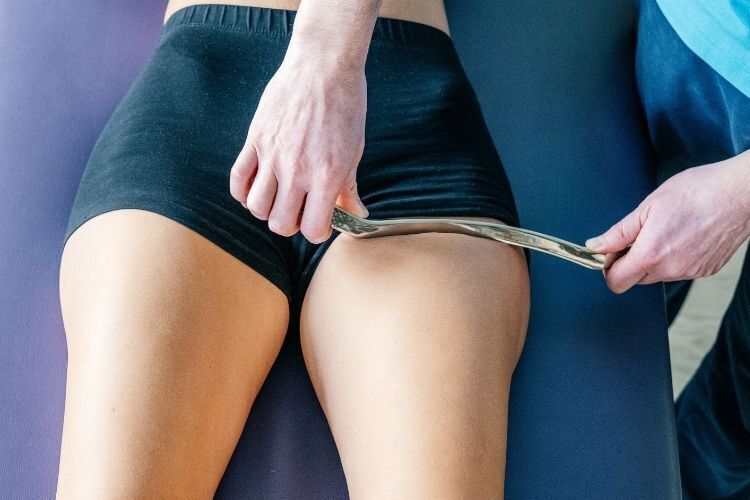
If you have ever dealt with a nagging muscle knot that will not release no matter how much you stretch, you may have heard of Active Release Technique. Often shortened to ART, this hands on treatment approach targets the soft tissue restrictions that cause pain, tightness, and limited range of motion. At Evolution Spine and Sports Therapy in Evanston, we use Active Release Technique to help patients of all ages and activity levels get back to moving without pain holding them back.
This post will walk through what ART actually is, how it works, who benefits most, and what to expect from a session.
Understanding Active Release Technique
Active Release Technique is a movement based soft tissue treatment. Unlike a standard massage, ART combines precise tension applied by the practitioner's hands with specific movements from the patient. The provider locates a tight or restricted area in a muscle, tendon, ligament, or nerve, applies focused pressure, then guides the patient through a controlled motion while that pressure is held.
This combination helps break up adhesions and scar tissue that form when soft tissue is overused, injured, or held in poor positions for long periods. Adhesions can restrict blood flow, compress nerves, and limit how far a joint can move. Over time, this creates the stiffness and pain many people just learn to live with.
The technique was developed to address a specific problem in traditional treatment. Passive treatments like heat or stretching alone often provide short term relief without resolving what caused the restriction in the first place. ART's active component, meaning the patient moves through a range while tension is applied, allows the practitioner to work through fibrous adhesions layer by layer.
Who Benefits From ART
One of the things we emphasize at our Evanston practice is that soft tissue restriction is not just an athlete's problem. We see it just as often in desk workers with tight hip flexors and rounded shoulders as we do in runners with tight calves or golfers with restricted rotation.
Common conditions that respond well to Active Release Technique include:
- Repetitive strain injuries from typing, lifting, or repetitive sport motions
- Tension headaches linked to tight neck and upper back muscles
- Carpal tunnel symptoms caused by soft tissue compression on the median nerve
- Plantar fasciitis and other foot or ankle tightness
- Shoulder impingement and rotator cuff tightness
- Sciatica symptoms related to piriformis or hip muscle tension
- Post injury scar tissue that limits flexibility
Dr. Travis Ahrens often points out that the goal is not just relief in the moment. "The best way to completely resolve the issue is getting into good habits," he explains. ART can release the restriction, but lasting results come from combining treatment with the right movement patterns and home care between visits.
What to Expect During a Session
A typical ART session starts with an assessment. Your provider will check your range of motion, ask about your symptoms, and identify which muscles or areas are likely contributing to your restriction. From there, they will use their hands to locate the specific tissue that needs work.
During treatment, you will actively move the affected body part, such as flexing your elbow or rotating your shoulder, while the provider maintains tension on the restricted tissue. This part can feel intense, sometimes described as a deep stretch combined with pressure, but it should not be sharp or unbearable pain. Most patients describe it as productive discomfort rather than pain.
Sessions are typically short, often 15 to 20 minutes for a focused area. Many patients notice improved range of motion immediately after a session, though full resolution of chronic restrictions may take a series of visits depending on how long the issue has been present.
How ART Fits Into a Broader Recovery Plan
ART works especially well when paired with other approaches. At Evolution Spine and Sports Therapy, we often combine Active Release Technique with chiropractic adjustments to address joint alignment alongside soft tissue restriction, or with therapeutic exercises designed to reinforce the new range of motion once it is restored. Simply releasing an adhesion without strengthening the surrounding muscles or correcting the habits that created it in the first place tends to lead to the same problem returning.
This is especially relevant for our sports therapy patients here in Evanston, from high school runners to weekend golfers to people training for their first triathlon. Sport specific movements place repetitive demand on particular muscle groups, and ART allows us to target those areas precisely rather than treating the body generally.
For patients dealing with desk related tightness, we frequently see restrictions in the hip flexors, upper traps, and forearms from prolonged sitting and screen use. ART combined with simple daily stretches and posture adjustments often produces the most durable improvement.
Is ART Right for You
If you have tried stretching, foam rolling, or general massage without lasting relief, Active Release Technique may address something those approaches miss. Because ART targets specific adhesions rather than treating tissue broadly, it tends to work faster on stubborn, localized restrictions.
That said, ART is not the right starting point for every condition. A proper evaluation helps determine whether your symptoms stem from soft tissue restriction, joint dysfunction, nerve involvement, or a combination. According to research published by the National Center for Biotechnology Information, soft tissue mobilization techniques like ART have shown positive outcomes for a range of musculoskeletal conditions when applied appropriately, particularly when combined with active rehabilitation.
Getting Started
Active Release Technique offers a targeted way to resolve muscle tightness, scar tissue, and nerve compression that other treatments have not fully addressed. Whether you are dealing with an old sports injury, a repetitive strain from work, or general stiffness that has crept in over time, understanding how your soft tissue restrictions developed is the first step toward lasting relief.
At Evolution Spine and Sports Therapy in Evanston, we build every treatment plan around your specific movement patterns and daily habits, not just the symptom in front of us. If you are curious whether ART could help your particular situation, our team is happy to walk through an assessment and explain what a treatment plan might look like for you. Schedule a consultation today and take the first step toward moving without restriction.
.jpg)
.jpg)